
Equity, Social Justice and Implicit Bias
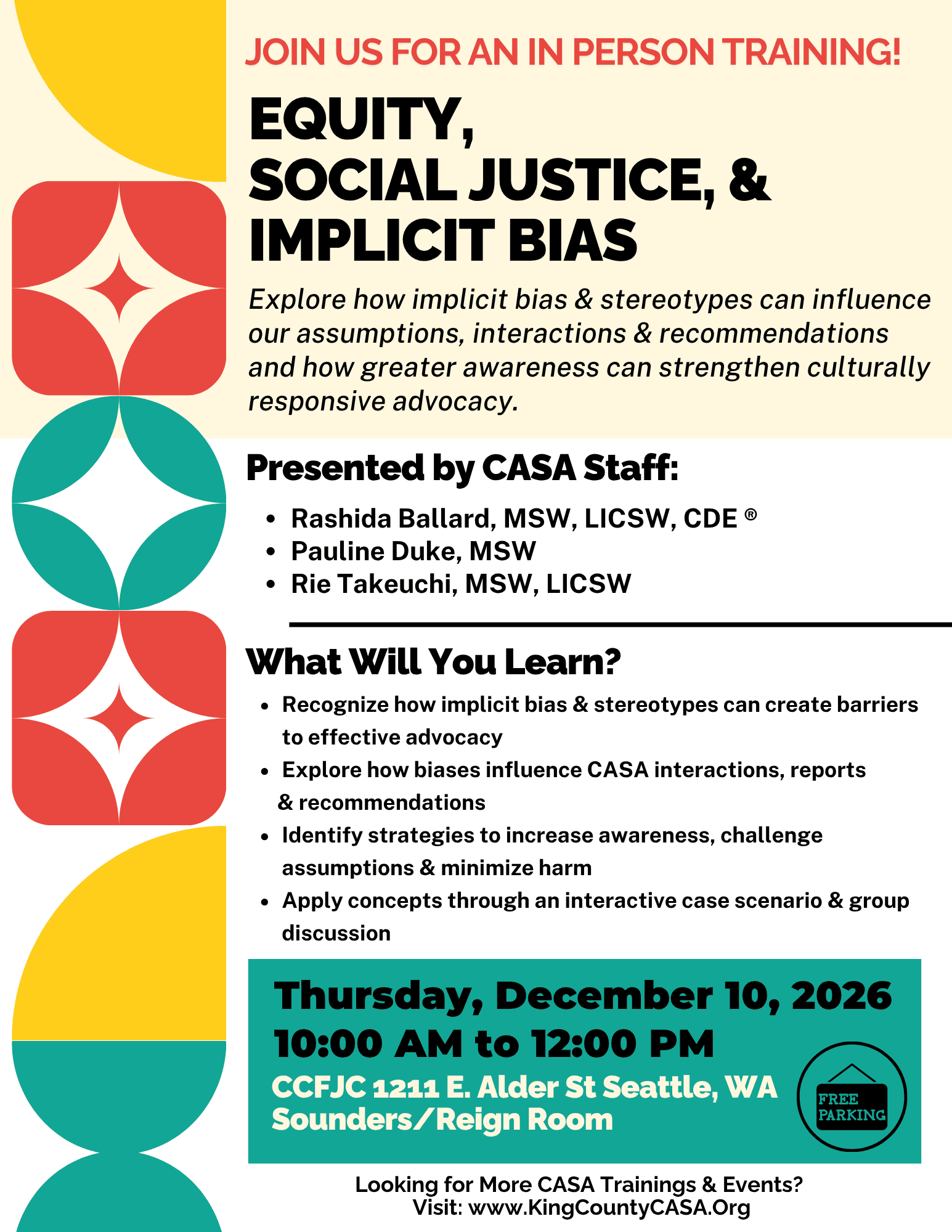
Join presenters from the CASA team, Rashida Ballard, Pauline Duke, and Rie Takeuchi, for this training which will focus on how implicit bias and stereotypes create barriers to cultural responsiveness, and in turn, impact our ability to provide effective advocacy. They will explore ow these barriers play out through assumptions, interactions and court reports and discuss strategies to increase awareness and minimize harm.
Cultivating awareness of biases and their impact on how we see and go about our practice provides the opportunity to gain a deeper understanding of our own decision making. This understanding normalizes that we all have biases while ensuring we’re accountable to continuously reflect on what informs our approach, conclusions and recommendations. This process can help ensure culturally responsive advocacy and more equitable treatment for the children, youth and families that experience the child welfare system.
This training counts towards the 3 hours of annual Equity and Social Justice training requirement for CASA volunteers.